

No products in the cart.
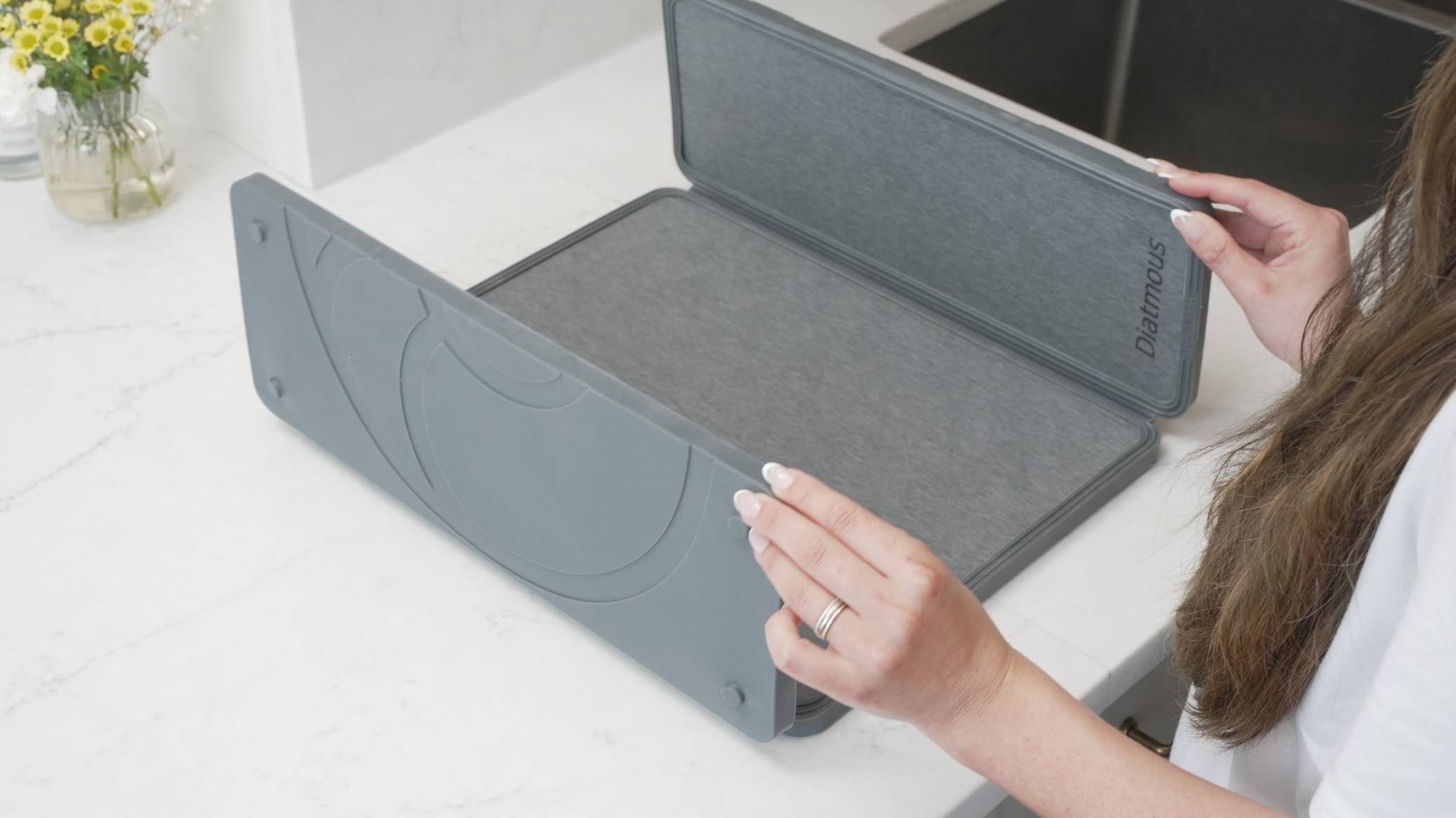
A diatomite drying mat that has stopped absorbing water hasn’t broken. It’s blocked. The stone works because of millions of microscopic pores, and anything that fills those pores — soap film, hard-water minerals, cooking oil — stops water getting in.
The good news is that it’s fully reversible. Here’s how to clean one properly, and how to bring a dead one back to life.
Everyday cleaning: less than you think
A diatomite mat does not need daily washing. It dries itself, which is the entire point.
Once a week, wipe the surface with a damp cloth and let it air dry. That’s it. If something spills, wipe it up rather than letting it soak in.
Stand the mat upright occasionally — against the backsplash or in a dish rack — so both faces get airflow. A mat that sits flat on the counter permanently dries more slowly on the underside.
What not to do
Most damaged mats are damaged by over-cleaning. Avoid all of the following:
- The dishwasher. Prolonged heat and detergent drive residue deep into the pores, which is the opposite of what you want.
- Soaking in soapy water. Soap film is the single most common cause of lost absorbency.
- Bleach or harsh chemicals. Unnecessary, and they can damage the silicone base.
- Scrubbing with a rough sponge. It smears residue across the surface rather than lifting it.
- Oven or direct heat drying. Thermal shock can crack the stone.
The reset: sanding
This sounds drastic and isn’t. Sanding removes the top layer of blocked pores and exposes fresh stone underneath. It’s the standard maintenance for every diatomite product, and a mat can take it many times over its life.
You’ll need fine-grit sandpaper — somewhere between 220 and 400 grit.
- Make sure the mat is completely dry. Sanding wet stone clogs the paper and achieves nothing.
- Sand the surface in light circular motions with even pressure. You’re not trying to remove material, just refresh the surface.
- A fine white dust will appear. That’s normal — it’s diatomite.
- Wipe the dust away with a dry cloth, then a barely damp one.
- Let it dry fully, then test with a few drops of water.
Water should absorb within a second or two. If it still beads, sand a little more.
Most mats need this every three to six months, depending on how hard your water is and how much soap ends up on the surface.
Stains
Diatomite is porous, so coloured liquids can leave marks. Coffee, tea, turmeric and red wine are the usual offenders.
Sanding removes most surface stains along with everything else. For anything stubborn, a paste of baking soda and a small amount of water, left for fifteen minutes and then wiped off and sanded, usually lifts it.
Deep stains that have travelled well below the surface may not come out entirely. They are cosmetic and don’t affect how the mat works.
Caring for the silicone base
The silicone underside needs almost nothing. Wipe it with a damp cloth when you notice crumbs or grease. Silicone tolerates soap far better than stone does, so a small amount of washing-up liquid is fine here — just keep it off the stone face.
Check the folding hinge occasionally for trapped debris, which can stop the mat folding flat.
Storage
Fold the mat only once it’s completely dry. Folding a damp mat traps moisture between the two halves, which is one of the few ways to actually make a self-drying mat smell.
Store it flat in a drawer, or stand it upright in a cupboard. Don’t stack heavy items on top — diatomite is strong under even pressure but can crack under a concentrated point load.
How long should one last?
Years, with this level of care. There’s no coating to wear off and no fibres to break down; you’re simply managing surface residue on a piece of stone.
Replace it if the stone cracks through, or if sanding no longer restores absorption — which usually means the mat was low-density and heavily filled to begin with.
Quick reference
- Weekly: wipe with a damp cloth, air dry
- Monthly: stand upright for a few hours to fully air out
- Every 3–6 months: light sand with 220–400 grit paper
- Never: dishwasher, soaking, bleach, direct heat
The Diatmous™ Stone Dish Drying Mat uses high-density diatomite, which holds up to repeated sanding far better than the cheaper filled alternatives. Every order plants one tree.
Not sure whether a stone mat is right for your kitchen? Read our honest guide to whether diatomaceous earth drying mats actually work.
