No products in the cart.
If your kitchen towel always feels a little damp and your counter never seems to fully dry, there’s a simple reason: cotton holds water — it doesn’t get rid of it. A diatomaceous earth dish drying mat works on a completely different principle, and once you understand it, it’s hard to go back to a towel.
What is diatomaceous earth?
Diatomaceous earth is a soft, naturally occurring stone formed from the fossilized remains of diatoms — microscopic algae — laid down over millions of years. It’s the same natural material used in food storage and water filtration, prized for one unusual quality: it’s incredibly porous. Under a microscope, a piece of diatomaceous earth looks like a sponge made of glass, riddled with tiny channels.
That porosity is the whole trick. When you press this stone flat into a mat, you get a surface covered in millions of microscopic openings, all eager to pull in moisture.
How the mat pulls water off your dishes
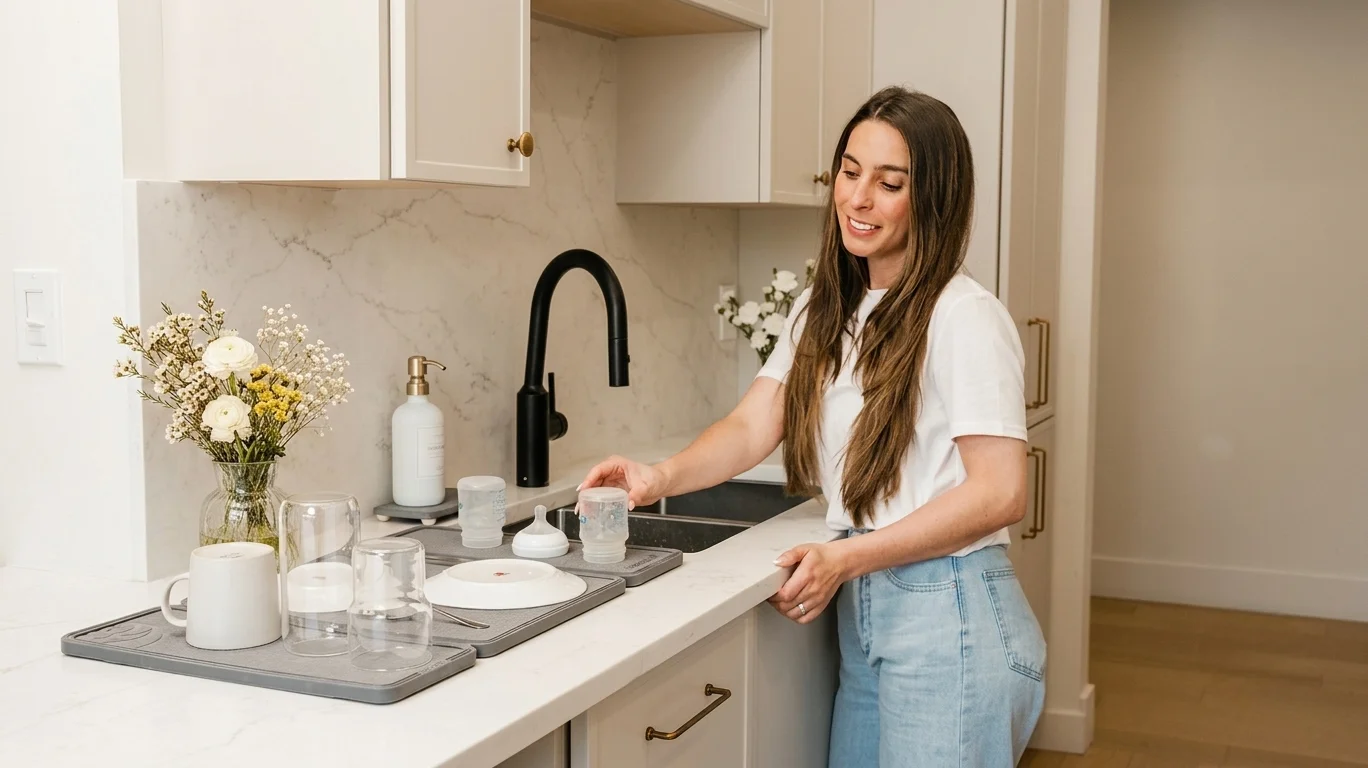
Set a wet plate on a diatomaceous earth dish drying mat and capillary action takes over almost instantly. Those microscopic channels act like thousands of tiny straws, wicking water off the dish and drawing it into the stone. From there, the mat slowly releases the moisture back into the air as vapor.
The result is a surface that absorbs water fast and then dries itself out, ready for the next round of dishes. There’s no puddle to wipe, no fabric to wring, and no electricity involved — just physics doing the work quietly in the background.
Why it beats a dish towel
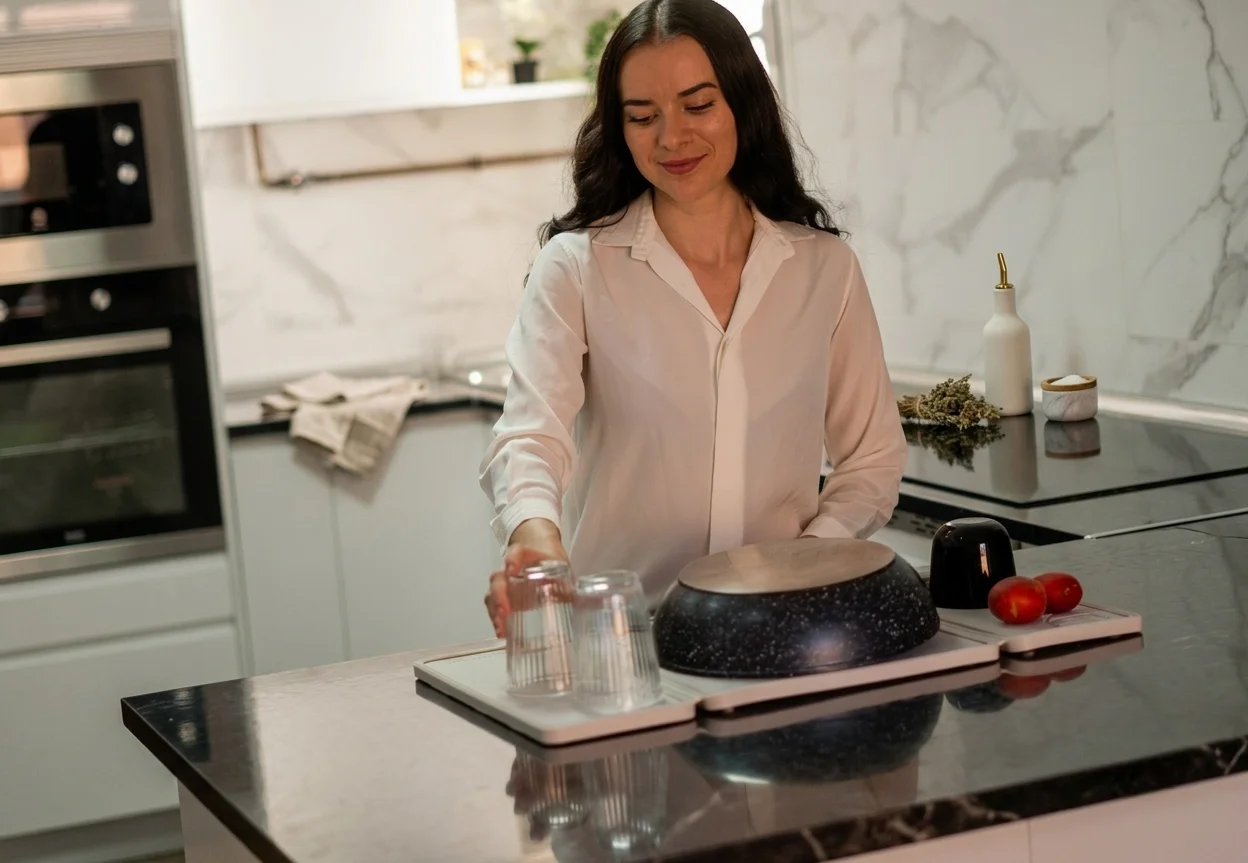
A folded dish towel can only hold so much water before it saturates. Once it does, it stops absorbing and simply stays damp on your counter for hours. A diatomaceous earth dish drying mat keeps wicking and releasing, so it works through a full load of dishes and dries fresh between uses.
There’s also the look of it. A towel bunched on the counter reads as clutter. A clean stone mat reads as a tidy, intentional kitchen — which is a small thing that makes a daily difference.
The Diatmous difference: stone core, silicone shell
Bare diatomite slabs have one weakness: they crack, chip, and stain over time. We fixed that. Every Diatmous stone dish drying mat wraps a pure diatomaceous earth core inside a food-grade, heat-resistant silicone shell. The stone still does the absorbing, but the shell keeps it from cracking, grips your counter, and wipes clean. A grid of raised silicone dots lifts your dishes slightly so air can keep circulating underneath, and the whole mat folds flat to store.
You get the performance of natural stone without the fragility that makes bare slabs frustrating.
Keeping it working at its best
Maintenance is light. Rinse the mat under running water or wipe the silicone with a damp cloth between uses, then let it air-dry. Over time, if the surface slows down, a quick pass with the included sanding pad opens the pores back up. We cover the full routine in our guide on how to clean and care for a stone dish drying mat.
The bottom line
A diatomaceous earth dish drying mat isn’t a gimmick — it’s a centuries-old natural material doing exactly what it’s good at. It dries your dishes, keeps your counter clean, and asks almost nothing of you in return. If you’re tired of the damp-towel cycle, see the Diatmous mat here — and remember, every order plants a tree.